
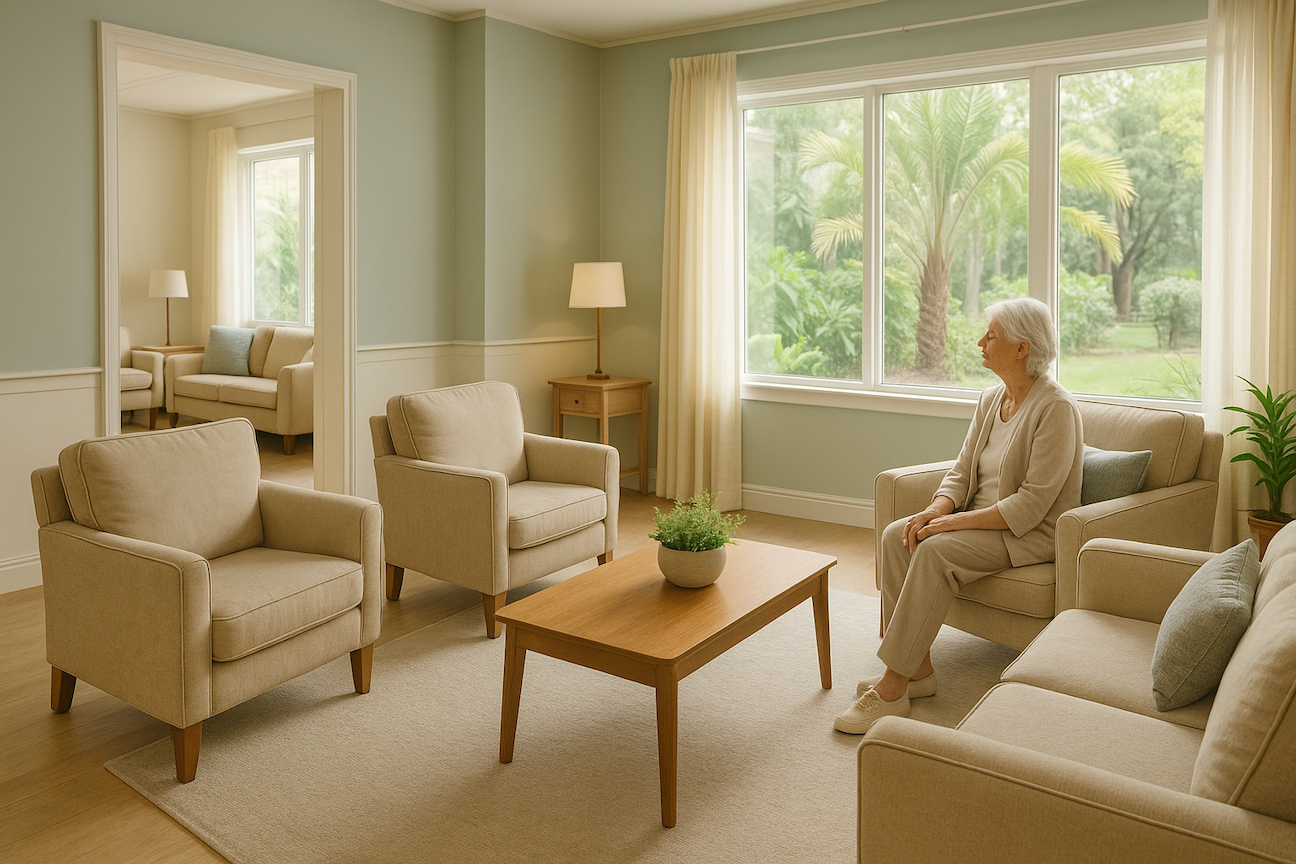
When you walk into a well-designed South Florida memory care community, you might not immediately notice what makes it special. It simply feels calm. The lighting doesn’t strain your eyes. The colors feel soothing. You can navigate easily without confusion. These aren’t accidents. Every element of the environment has been carefully chosen to support the unique needs of people living with Alzheimer’s and dementia.
For families in South Florida considering memory care options, understanding how environment affects your loved one’s daily experience can help you make better decisions. The physical space where your parent lives will significantly impact their comfort, safety, and quality of life.
Why Environment Matters More for Dementia
Your mother’s brain can no longer process sensory information the way it once did. Bright overhead lights might cause painful glare that she cannot articulate. A busy wallpaper pattern might create visual confusion that triggers anxiety. A long, identical hallway might leave her disoriented, unable to find her room.
These environmental challenges don’t just cause momentary discomfort. They create ongoing stress that accumulates throughout the day, leading to the agitation, anxiety, and behavioral symptoms families find so difficult to manage. Research published in the journal HERD (Health Environments Research & Design) demonstrates that specific environmental design interventions are beneficial to behavioral, functional, and well-being outcomes for people with dementia, with carefully designed spaces significantly reducing agitation and improving quality of life.
In South Florida, we face unique environmental considerations. Our intense sunlight requires careful window treatment to prevent glare while still providing natural light. The humidity necessitates climate control that prevents the stuffiness that can increase agitation. And our tropical landscaping offers opportunities for safe outdoor spaces that aren’t available in colder climates.
The Foundation: Safety Without Looking Institutional
Quality memory care environments prioritize safety while maintaining a residential, homelike feeling. This balance is critical because environments that look too clinical or institutional can increase anxiety for residents who still retain some awareness of their surroundings.
Flooring provides perhaps the clearest example. Memory care communities use non-slip surfaces to prevent falls, but they avoid glossy finishes that can appear wet or slippery to someone with dementia. Dark floor mats at doorways can look like holes to be stepped over. Sudden changes in flooring color or pattern can appear as steps or obstacles. The best memory care environments use consistent, matte flooring in neutral tones that provide visual continuity while ensuring safety.
Doorways and transitions receive similar attention. Clear sight lines help residents understand where they can go. Doors to utility rooms, medication storage, or other restricted areas blend into walls or are disguised to discourage attempts to exit. Doors to areas where residents should feel free to wander, like activity rooms or outdoor courtyards, remain visible and inviting.
Secure outdoor spaces are particularly valuable in South Florida’s year-round pleasant weather. Walking paths, shaded seating areas, and sensory gardens provide opportunities for safe outdoor time without the risks of wandering. These spaces need protection from direct afternoon sun while allowing residents to enjoy fresh air and nature, which research shows reduces agitation and improves mood.
Color and Light: Creating Calm Through Design
The colors surrounding your father all day directly affect his emotional state and cognitive function. Memory care design uses color psychology specifically adapted for dementia care.
Warm, muted tones dominate the best environments. Soft sage greens, warm beiges, gentle blues, and earthy terracottas create calm without being boring. These colors don’t compete for attention or create visual confusion. They provide subtle variety while maintaining overall harmony.
High-contrast colors serve specific purposes in memory care design. Toilet seats in contrasting colors help residents identify them more easily. Plates and bowls in colors that contrast with food improve eating by making meals more visually distinct. Handrails in contrasting colors along hallways provide clear guidance for navigation.
Lighting may be the single most important environmental factor. Natural light helps regulate circadian rhythms, reducing the sundowning phenomenon where confusion and agitation increase in late afternoon and evening. Large windows with views to gardens or courtyards provide orientation cues while bringing nature indoors.
Artificial lighting requires careful planning. Overhead fluorescent lights, common in older facilities, create harsh glare and shadows that can be frightening to someone with dementia. Quality memory care communities use layered lighting with multiple sources at different heights. Table lamps, wall sconces, and indirect lighting create an even, comfortable illumination that changes gradually throughout the day rather than abruptly switching from bright to dark.
South Florida’s abundant sunshine is both an asset and a challenge. Strategic window placement and treatments control glare while maximizing natural light. East-facing windows in common areas capture gentle morning sun. West-facing windows often feature UV-filtering treatments to prevent harsh afternoon glare while maintaining views.
Layout and Wayfinding: Supporting Independence
When your mother needs to find the bathroom, can she? When your father wants to return to his room, can he recognize which door is his? These daily navigation challenges profoundly affect dignity and independence.
Memory care layouts typically use circular or figure-eight floor plans that eliminate dead-end hallways. Residents can wander safely along these paths, always returning to familiar spaces without encountering confusing turns or feeling trapped.
Visual landmarks help with wayfinding. A distinctive piece of furniture near the dining room entrance becomes a reference point. A large aquarium at a hallway intersection provides both wayfinding support and calming visual interest. Artwork changes at different sections of the building, offering subtle navigation cues.
Individual room identification uses multiple approaches. Large, clear room numbers in high-contrast colors help those who can still process numbers. Memory boxes or shadow boxes outside each door display personal photographs and meaningful objects, allowing residents to recognize their space even when they cannot remember a room number. Some communities use different colored doors in different wings, adding another layer of identification.
Common areas need a clear purpose and identity. The dining room should obviously be for dining, with tables set and familiar food-service cues. The activity room should invite participation with visible materials and comfortable seating arranged for groups. The living room should feel like a living room, with sofas, lamps, and décor that communicate relaxation and socializing.
Reducing Sensory Overload
Dementia often increases sensitivity to sensory stimulation while decreasing the ability to filter out irrelevant input. What seems like normal background noise to you might be overwhelming chaos to someone with Alzheimer’s.
Sound control is essential. Hard surfaces bounce sound, creating echoing that makes conversation difficult and increases confusion. Memory care communities use carpet, upholstered furniture, acoustic ceiling tiles, and sound-absorbing wall treatments to create quieter environments. Background music, when used, remains low and consists of familiar, calming selections rather than stimulating or unfamiliar sounds.
Visual simplicity prevents overwhelming the brain. Busy wallpaper patterns, multiple competing colors, and cluttered spaces create cognitive overload. The best memory care environments embrace simplicity without sterility, using clean lines, organized spaces, and purposeful décor that adds warmth without creating chaos.
Smell also matters. While facilities must maintain cleanliness, heavy cleaning product odors or strong air fresheners can be unpleasant or confusing. Subtle, natural scents like lavender or vanilla in common areas can actually reduce anxiety, while cooking smells wafting from the kitchen provide comforting, orienting cues about mealtime approaching.
Meaningful Design Elements That Support Purpose
Beyond safety and calm, the best memory care environments incorporate elements that support continued engagement and purpose. These features recognize that despite cognitive decline, your parent still benefits from meaningful activity and connection.
Activity spaces designed for success include work tables at comfortable heights with good task lighting, storage that displays materials visually rather than hiding them behind closed doors, and flexible arrangements that support both group activities and individual projects.
Kitchen areas visible from common spaces provide opportunities for residents to observe or participate in food preparation, a familiar activity that many can still enjoy with support. The smell of cookies baking, the sight of vegetables being chopped, or the opportunity to fold napkins for dinner all provide purpose and connection to lifelong roles.
Memory walls displaying historical photos, old advertisements, vintage household items, and memorabilia from residents’ younger years stimulate reminiscence and conversation. These aren’t just decoration but therapeutic tools that support cognitive engagement.
The South Florida Advantage: Climate-Responsive Design
South Florida memory care communities can leverage our climate in ways that northern facilities cannot. Year-round outdoor access means therapeutic gardens, walking paths, and courtyard sitting areas provide daily opportunities for fresh air, sunshine, and nature connection.
Covered outdoor spaces, essential in our climate, allow residents to be outside during rain showers or intense sun. These transitional areas, neither fully indoors nor completely exposed, offer sensory variety throughout the day.
Water features, carefully designed for safety, provide both visual interest and calming sound. A recirculating fountain or small pond with fish gives residents something living and changing to observe, supporting engagement with their environment.
Tropical landscaping with flowering plants, palms, and native vegetation creates sensory richness through color, texture, and gentle fragrance. For residents who spent their adult lives in South Florida, these familiar plants provide environmental continuity with their previous homes.
What to Look For During Your Visit
When you tour memory care communities, observe the environment with your parent’s needs in mind. Notice whether you feel calm or slightly stressed by the space. Trust your initial reaction because your loved one will have a similar response, only magnified by their cognitive impairment.
Look at lighting carefully. Can you see clearly without glare? Are there shadows in corners that might be frightening? Does the space feel naturally lit during daytime?
Observe the activity level and sound level. Is there a comfortable buzz of activity or chaotic noise? Can you have a conversation without raising your voice?
Check the outdoor spaces. Are they accessible, safe, and inviting? Would your parent want to spend time there?
Notice the small details. Are hallways cluttered with equipment or clear and welcoming? Do individual rooms look homelike or institutional? Can you imagine your parent feeling comfortable here?
The Emotional Impact of Environment
Perhaps most importantly, consider how the environment will affect your parent emotionally. A calm, comfortable, thoughtfully designed space reduces the daily stress and confusion that exhausts people with dementia. When the environment supports them rather than challenges them, they can use their remaining cognitive abilities for engagement, connection, and experiencing moments of joy rather than just navigating their surroundings.
This holiday season, as you evaluate memory care options for your loved one, remember that environment isn’t just about aesthetics. It’s about creating a physical space that supports your parent’s brain function, reduces their anxiety, and allows them to live with as much comfort and dignity as possible.
The right environment won’t stop dementia’s progression, but it will significantly improve your parent’s daily experience of living with the disease. And that matters enormously, both for their quality of life and for your peace of mind knowing they’re in a space designed specifically to support their needs.
Frequently Asked Questions
How does memory care environment differ from regular assisted living?
Memory care environments incorporate specific design elements that regular assisted living typically doesn’t include. These include circular layouts to prevent dead-end confusion, enhanced safety features disguised to avoid institutional appearance, specialized lighting to reduce glare and shadows, higher staff-to-resident ratios reflected in more intimate common spaces, and secured outdoor areas for safe wandering. Memory care also eliminates environmental elements that can trigger anxiety in dementia, like mirrors, certain patterns, or glossy surfaces. The overall approach prioritizes cognitive support alongside physical care needs.
Can environmental design really reduce the need for medication?
Research indicates that appropriate environmental design can significantly reduce behavioral symptoms that might otherwise require medication management. When residents feel less confused and anxious due to supportive environmental cues, they experience fewer agitation episodes, reduced wandering behavior, better sleep patterns, and improved engagement. While some residents still require medication for dementia-related symptoms, a well-designed environment often allows for lower doses or fewer medications than would be needed in a poorly designed space. This represents better quality of life with fewer potential medication side effects.
What if my parent gets confused by the environment anyway?
Even the best-designed environment won’t eliminate all confusion for someone with moderate to advanced dementia. However, good design reduces confusion frequency and severity. Your parent will still have difficult moments, but they’ll have fewer of them, and the episodes will be less severe. Environmental design works alongside staff training and individualized care approaches to provide comprehensive support. The goal isn’t perfect clarity, which dementia makes impossible, but maximizing comfort and minimizing distress within the reality of cognitive decline.
Does a homelike environment really matter if my parent won’t remember where they are?
The emotional and psychological impact of environment doesn’t require conscious memory. Even when your parent cannot remember they’re in memory care or recall the name of the facility, their brain still processes the sensory input around them. A homelike, comfortable environment creates feelings of safety and calm that persist even without explicit memory. Conversely, a cold, institutional environment creates ongoing stress even if the person cannot articulate why they feel uncomfortable. Environment affects mood and behavior regardless of memory function.
How important is outdoor space in South Florida memory care?
Outdoor space is particularly valuable in South Florida because year-round pleasant weather makes daily outdoor time feasible. Research shows that nature exposure reduces agitation, improves mood, supports better sleep, and provides sensory stimulation in a calming context. For residents who lived their adult lives in Florida, being outside connects them to lifelong environmental patterns. Quality outdoor spaces with walking paths, seating areas, and shade should be a priority when evaluating South Florida memory care options. Ask how often residents actually use outdoor areas, not just whether they exist.
What sensory elements are most important for dementia care?
Lighting ranks as the most critical sensory element, followed closely by sound control and visual simplicity. Natural light helps regulate sleep-wake cycles and provides orientation cues throughout the day. Controlled sound levels prevent sensory overload and reduce agitation. Visual simplicity through muted colors, minimal patterns, and organized spaces prevents cognitive overwhelm. Familiar smells like baking or subtle lavender can comfort, while harsh chemical odors should be avoided. Tactile elements like soft fabrics, varied textures in safe materials, and opportunities to touch plants or pets provide grounding sensory experiences.
Making the Right Choice for Your Family
As you consider memory care options this December, remember that environment is not a luxury feature or aesthetic preference. It’s a fundamental component of quality dementia care that directly impacts your loved one’s daily comfort, safety, and emotional well-being.
The months ahead will bring their own challenges as you navigate this transition. But choosing a memory care community with thoughtfully designed environments means you’re giving your parent the best possible foundation for their care. Every carefully considered color choice, every strategically placed window, every clear pathway and familiar landmark works together to reduce confusion and support the cognitive abilities they retain.
When you tour South Florida memory care communities, trust what you observe and how the space makes you feel. A well-designed environment will communicate calm and welcome from the moment you enter. You’ll see residents who appear comfortable and engaged rather than anxious or withdrawn. You’ll notice staff members moving confidently through spaces designed to support their caregiving rather than complicate it.
Your parent deserves to live in an environment that supports them rather than challenges them at every turn. As you make this important decision, prioritize communities that understand how profoundly environment affects the dementia experience and have invested in creating spaces that truly serve the people living there.
About Courtyard Gardens Senior Living
Courtyard Gardens Senior Living provides specialized memory care in an environment thoughtfully designed for the unique needs of seniors with Alzheimer’s and dementia. Our South Florida community serves families throughout Miami-Dade, Broward, and Palm Beach counties with purpose-built spaces that prioritize comfort, safety, and dignity. Every element of our environment, from lighting to layout to our tropical outdoor spaces, supports cognitive function and reduces anxiety.
