
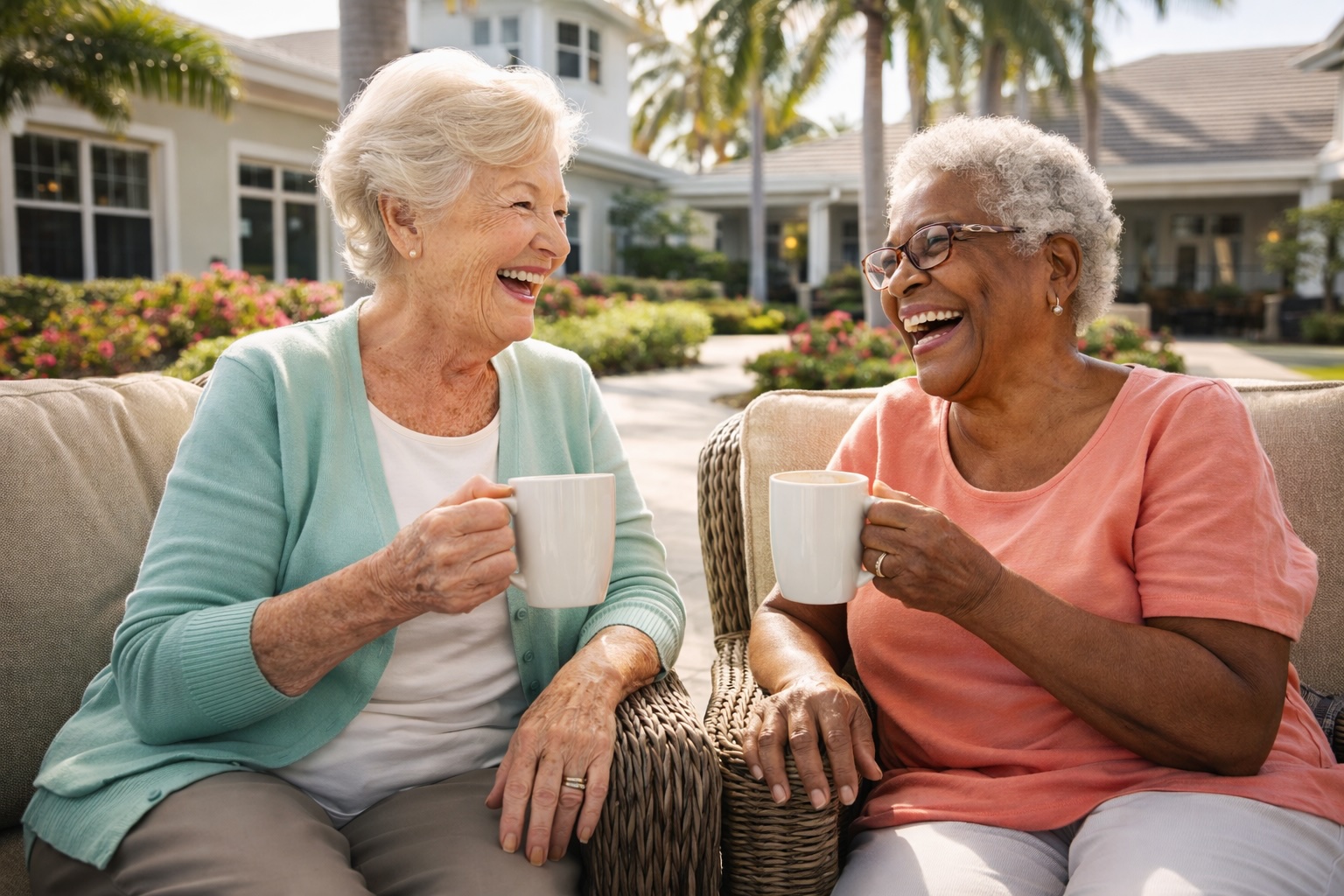
You’ve spent seven decades building friendships through work, neighborhoods, children’s activities, and shared experiences. Now you’re considering assisted living, and one worry keeps surfacing: Can you really make new friends at this stage of life?
The short answer is yes. The better answer is that making friends in assisted living might actually be easier than it’s been in years.
Why Friendship Feels Different Now
Let’s acknowledge the reality. Making friends at 75 or 80 looks nothing like making friends at 25. You’ve lost people. Your social circle has shrunk through moves, health changes, and the inevitable losses that come with living a long life. Maybe your closest friend moved to be near family in another state. Maybe your spouse, who was your primary companion, is gone.
The prospect of starting over socially feels daunting. You’re not sure you have the energy for it. You worry about being the “new person” trying to break into established friend groups. You wonder if anyone will want to be friends with you, or if you’ll sit alone in the dining room like the unpopular kid at a new school.
These fears are completely normal and completely unfounded.
The Advantage You Didn’t Know You Had
Here’s what changes the equation entirely: in assisted living, everyone understands what you’re going through because they’re going through it too. You’re not the only new person. You’re not the only one whose social world has shrunk. You’re not the only one who wants connection but isn’t sure how to find it anymore.
This shared experience creates a foundation for friendship that didn’t exist in your earlier decades. You don’t need elaborate excuses to start conversations. “I just moved in last week” opens doors. “I’m still figuring out where everything is” invites help and company. Your vulnerability becomes the bridge rather than the barrier.
In South Florida assisted living communities, you’ll also find people from remarkably diverse backgrounds. Former teachers, business owners, artists, homemakers, military veterans, and professionals from every field imaginable. This diversity means you’ll find people who share your interests, values, and sense of humor, even if your life experiences differ dramatically.
How Community Design Supports Connection
Quality assisted living communities don’t leave friendship to chance. They structure daily life to create natural opportunities for connection without forcing it.
Common dining arrangements mean you’ll see the same faces regularly. Many communities use open seating rather than assigned tables, allowing you to choose your company while also encountering different people. This casual, repeated exposure is exactly how friendships form. You recognize someone from yesterday’s lunch. You exchange pleasantries. A week later, you’re having actual conversations. A month later, you’re seeking each other out.
Activity programs bring together people with shared interests. Join the book club and you’ll meet fellow readers. Participate in the gardening program and you’ll connect with others who love plants. Take the fitness class and you’ll bond with people committed to staying active. Shared activities create friendship almost accidentally; you’re focused on the book discussion or the flower planting, and friendship develops as a natural byproduct.
In South Florida, year-round pleasant weather means outdoor spaces become social hubs. Morning coffee on the patio, afternoon card games by the pool, evening walks through the gardens… these outdoor gathering spaces encourage the casual interactions that build into friendships. Unlike northern climates, where winter drives everyone indoors for months, our weather supports social connection every single day.
The Timeline of Making Friends
Friendship doesn’t happen overnight, and that’s okay. Understanding the typical progression helps you recognize that what feels slow is actually perfectly normal.
Week One: You’re learning names, faces, and the basic layout. You might exchange polite greetings but probably won’t form deep connections yet. This is normal.
Month One: You start recognizing regular faces and learning basic details about people. You know who likes to sit by the window, who always does the crossword puzzle, who shares your love of mystery novels. You’re building the foundation.
Month Three: Real friendships begin emerging. You find yourself looking for certain people at meals. You save seats for each other at programs. You knock on each other’s doors to see if the other wants to take a walk. These aren’t forced relationships; they’ve developed naturally through proximity and shared experiences.
Month Six: You have genuine friends. People you genuinely enjoy, who make you laugh, who you confide in about the things that matter. Your social life has rebuilt itself around these new connections.
This timeline varies by personality. Extroverts might move faster; introverts might take longer. Both approaches work fine. The key is understanding that friendship is a process, not an event.
Starting Conversations When You’re Out of Practice
If you’re worried you’ve forgotten how to make friends, here are conversation starters that work naturally in assisted living settings:
At meals: “Is this seat taken?” followed by “I’m [your name], I moved in last week. How long have you been here?”
At activities: “Is this your first time at book club?” or “Have you been doing the exercise class long?”
In common areas: “I love this spot by the window. Do you come here often?” (Yes, it sounds like a pickup line, but it works perfectly well for friendship.)
About the food: “Have you tried the Wednesday night special? I’m still learning what’s good here.”
About the community: “I’m trying to figure out how to [get my mail/find the library/sign up for the bus trip]. Do you know?”
Notice what these openers have in common: they’re simple, they’re relevant to your immediate shared context, and they invite response without demanding deep conversation. You’re giving the other person an easy way to engage or politely decline.
When Friendship Feels Hard
Some days, making an effort feels like too much work. You’re tired. You don’t feel like being social. You want to eat in your apartment alone rather than face the dining room. This is completely valid.
The good news about assisted living is that opportunities keep coming. Missing one activity or one meal doesn’t close doors permanently. Tomorrow brings another chance. Next week’s program offers another opportunity. The community rhythm continues whether you participate every single time or just when you feel up to it.
However, if you find yourself consistently avoiding social opportunities because of anxiety rather than genuine preference for solitude, it’s worth pushing yourself gently. The anticipation of social interaction is often worse than the reality. Once you’re actually sitting at the table or participating in the activity, it’s usually easier than you expected.
The Role of Shared History
One beautiful aspect of friendships after 75 is the shared historical context. Your new friends remember the same world events, listened to the same music, lived through the same cultural moments. This common foundation makes conversation easier in ways that friendships across generations sometimes miss.
You don’t have to explain what it was like before cell phones or what the world felt like during certain historical periods. Your new friends were there too. This creates an immediate sense of being understood that’s deeply comforting.
In South Florida senior living communities, you’ll meet snowbirds who spent winters here for decades before moving permanently, locals who’ve watched the region transform over fifty years, and transplants from all over who chose South Florida as their retirement destination. These varied perspectives create rich conversations while the shared experience of aging provides common ground.
Different Kinds of Friendship
Not all friendships look the same, and that’s perfectly fine. You might develop several different types of connections in assisted living:
Mealtime friends: People you enjoy eating with regularly but don’t necessarily spend time with outside of meals. These relationships are valuable even if they’re bounded.
Activity buddies: Friends connected through shared interests. You take the exercise class together or always play cards on Thursday afternoons, but might not interact much beyond that specific context.
Close confidants: The deeper friendships where you share personal thoughts, support each other through challenges, and genuinely care about each other’s well-being. You’ll probably develop one to three of these rather than dozens.
Casual acquaintances: People you greet warmly, exchange pleasantries with, and feel glad to see, even though you’re not close friends. These light connections matter more than people sometimes realize; they create a sense of belonging and community.
All of these relationship types contribute. You don’t need to turn every acquaintance into a close friend to have a rich social life.
Navigating Personality Differences
You won’t like everyone, and everyone won’t like you. This reality doesn’t change at 75. What does change is that you have decades of experience handling personality differences, setting boundaries, and choosing where to invest your social energy.
If someone rubs you wrong, you can politely minimize contact without drama. You can eat at different tables, attend different activities, and simply maintain cordial distance. The community is large enough to avoid people you don’t click with while still having plenty of other options.
Conversely, if you meet someone who drives you crazy but whom everyone else loves, trust your own judgment. You don’t need to force friendship with anyone just because they’re popular or because someone thinks you “should” be friends.
What About Losing New Friends?
This is the hard reality of making friends in your seventies and eighties: you’ll likely lose some of them. People decline cognitively and move to memory care. Health crises happen. People pass away. These losses hurt, and there’s no way around that pain.
However, the alternative, avoiding friendship to avoid loss, means living without the joy, support, and richness that connection provides. Research confirms that social connection is essential for health and well-being at every age, with meaningful relationships protecting against depression, cognitive decline, and even physical health problems. Most people find that having friends and losing them is far better than never having friends at all.
The good news is that assisted living communities provide built-in support during these losses. Staff members understand. Other residents understand. You’re not grieving alone, and often the community grieves together, which can be healing.
Taking the First Step
If you’re reading this while considering assisted living, wondering whether you’ll find your people, here’s what to do: give yourself permission to be nervous while also being open to possibility. Tour communities and notice whether you see people engaged in conversation, whether there’s laughter in common spaces, whether residents seem genuinely connected rather than just physically proximate.
If you’ve already moved in and you’re struggling socially, start small. Commit to eating one meal per day in the dining room rather than in your apartment. Attend one activity per week that interests you. Say good morning to people you pass in the hallways. These tiny steps create the foundation for bigger connections.
Most importantly, believe that friendship is still possible for you. Your age doesn’t disqualify you from connection, companionship, and the joy of people who genuinely like you and want to spend time with you. Those relationships are waiting; you just need to show up for them.
Frequently Asked Questions
What if I’m naturally introverted and making friends has always been hard for me?
Assisted living actually works well for introverts because it provides structure and repeated exposure without requiring forced socializing. You can choose quieter activities like book clubs or art classes rather than large group events. You can eat meals with just one or two people rather than at big tables. The key is finding the social level that feels comfortable while still maintaining some connection. Even introverts need companionship; it just looks different than what extroverts need.
How do I handle cliques or feeling excluded?
Cliques can form in any group setting, including assisted living. If you encounter this, remember that many other residents probably feel similarly excluded. Seek out those people rather than trying to break into established groups. Also, give it time; what looks like an impenetrable clique might just be people who’ve been there longer and will warm up once they know you better. Finally, talk to activities staff if you’re struggling; they can help facilitate introductions and connections.
What if my interests are different from most other residents?
Diversity in backgrounds and interests is actually common in assisted living, especially in South Florida, where residents come from all over the country and the world. If the existing activities don’t match your interests, speak up. Many communities will add programming if there’s resident interest. You might also find that trying new activities introduced by others expands your horizons in unexpected ways.
Can I maintain friendships from my previous life after moving to assisted living?
Absolutely, and you should. Quality assisted living communities support maintaining outside relationships through accommodating visitors, providing private spaces for entertaining guests, and sometimes offering transportation to meet friends outside the community. Your new friendships in assisted living complement rather than replace your existing relationships. Many residents maintain both successfully.
How do I deal with friends who have different political or religious views?
The same way you’ve handled it for 75+ years: decide what’s worth discussing and what’s worth avoiding, set boundaries around divisive topics, and remember that friendship can exist across disagreement. Many people find that assisted living friendships focus more on shared daily experiences and less on abstract political debates, which can actually be a relief. When conflicts do arise, the community usually has protocols for helping residents navigate disagreements respectfully.
What if I move in and just don’t click with anyone?
Give it at least three to six months before deciding you’re incompatible with everyone. Friendships take time to develop, and initial impressions aren’t always accurate. If you’re still struggling after that time, talk honestly with the community’s activities director or social worker. They might suggest different activities, introduce you to residents you haven’t met yet, or help identify what’s creating the barrier. In rare cases where the community truly isn’t a good social fit, it’s okay to consider other options, though this is uncommon.
Is it weird to have friends who are significantly older or younger than me?
Not at all. Assisted living communities typically house residents ranging from their early seventies to their late nineties or beyond. Age gaps that might have mattered more in earlier life often matter less now. A vibrant 85-year-old and a thoughtful 75-year-old might be perfect friends despite the age difference. Focus on compatibility, shared interests, and genuine enjoyment of each other’s company rather than numerical age.
How do I maintain friendships if my health declines?
Quality communities help maintain connections even when health changes. If you become less mobile, friends might visit you in your apartment rather than meeting in common areas. If you need to spend time in healthcare, true friends will stay connected. The proximity of assisted living means even small amounts of energy can sustain friendships; your friend is down the hall, not across town. Many residents find that facing health challenges together actually deepens friendships.
About Courtyard Gardens Senior Living
Courtyard Gardens Senior Living in Boynton Beach, Florida, creates an environment where friendships flourish naturally. Our assisted living community serves residents throughout Palm Beach, Broward, and Miami-Dade counties with thoughtfully designed spaces that encourage social connection, diverse activity programming that brings people together around shared interests, and a warm, welcoming atmosphere where new residents feel at home quickly. We understand that friendship and social connection are essential to quality of life at every age. Learn more about our community and schedule a visit to experience our welcoming environment, or call us at 561-336-4958.
