
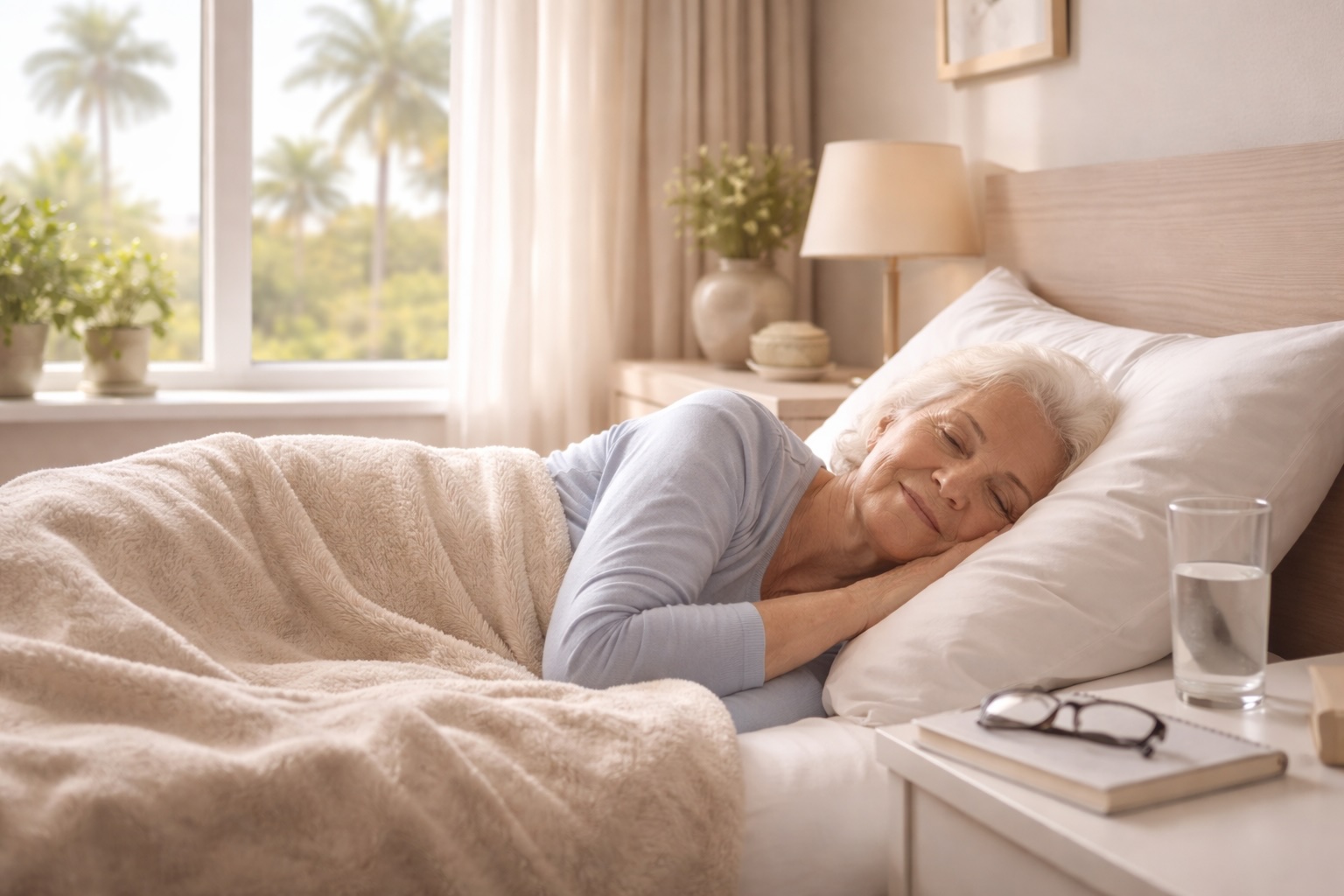
You’ve spent decades falling asleep easily, but somewhere in your seventies, that changed. Now you lie awake at 2 AM, or you wake at 4 AM and can’t get back to sleep, or you drift off during the day only to toss and turn all night. If this sounds familiar, you’re not imagining the problem. Sleep genuinely changes as we age, and the home environment that worked for years might now be working against your rest.
Why Sleep Gets Harder After 70
Your body produces less melatonin now than it did at 40, making it harder to fall asleep and stay asleep. Your sleep cycles become lighter and more fragmented, so small disturbances that wouldn’t have woken you before now pull you from sleep completely. You spend less time in the deep, restorative stages of sleep that leave you feeling genuinely rested. These aren’t personal failures or signs you’re doing something wrong. They’re normal biological changes that affect nearly everyone as they age.
Medical conditions complicate things further. Arthritis pain flares at night when you’re still. An enlarged prostate sends you to the bathroom multiple times. Acid reflux worsens when you lie flat. Medications for blood pressure, heart conditions, or other health issues can interfere with sleep patterns as a side effect. Even if you take all your medications correctly and manage your conditions well, the cumulative effect on sleep can be significant.
Then there’s the anxiety piece. When you lived in your own home for forty years, you knew every sound. The house settling, the refrigerator cycling, the neighbors’ routines. These familiar sounds didn’t wake you because your brain recognized them as normal. But as you’ve aged and perhaps become more isolated, nighttime sounds might trigger worry. Is someone breaking in? Did you lock the door? Should you check on something? This heightened vigilance, even at a subconscious level, prevents the deep relaxation necessary for quality sleep.
What Most People Try at Home
You’ve probably already attempted the standard advice. You avoid caffeine after lunch, you keep your bedroom dark, you try to maintain a regular bedtime. Maybe you’ve invested in blackout curtains, a better mattress, or a white noise machine. You might take melatonin supplements or prescription sleep aids. These strategies help some people, and if they’re working for you, that’s wonderful. But for many older adults living alone or with an equally elderly spouse, these solutions don’t fully address the underlying problems.
Living alone means managing everything yourself, which creates its own sleep disruptions. You’re responsible for every household sound at night. If something seems off, there’s no one else to check on it, so you get up yourself, fully waking in the process. You might worry about falling during nighttime bathroom trips with no one there to help. The cognitive load of managing a household solo, even while sleeping, prevents the complete relaxation that deep sleep requires. You’re always a little bit on duty, a little bit alert, even when you should be resting.
The daily activity level at home often isn’t enough to promote good sleep. When you’re not going out much, not walking very far, not engaging in regular activities, your body doesn’t develop the healthy fatigue that leads to solid sleep. You might nap from boredom or lack of stimulation during the day, which then makes nighttime sleep more difficult. It becomes a frustrating cycle where poor sleep leads to daytime fatigue, daytime fatigue leads to inactivity and napping, and inactivity makes nighttime sleep worse.
How Assisted Living Changes the Equation
The structured routine of assisted living does more for sleep than most people realize. When dinner happens at the same time every evening, when activities follow predictable patterns, when the day has a consistent rhythm, your body’s internal clock strengthens. This regularity helps regulate your circadian rhythm in ways that irregular home schedules simply can’t match. Your brain begins to anticipate sleep at the appropriate time because it’s receiving consistent signals throughout the day about when activities happen, when meals occur, and when quiet evening hours begin.
The environment itself supports better sleep in ways that are hard to replicate at home. Noise control is professional rather than DIY. Staff members handle late-night sounds and concerns so you don’t have to lie awake wondering if that noise requires investigation. If you need assistance during the night, help is available quickly, which means you can get back to sleep faster rather than lying awake after struggling to handle something yourself. Climate control maintains consistent temperature and humidity, important factors in sleep quality that become harder to manage in aging home systems. In South Florida particularly, where overnight temperatures and humidity can fluctuate, professional climate control prevents the sleep disruptions caused by being too warm or too cool.
The activity programming addresses the physical tiredness component that home life often lacks. When you participate in morning exercise classes, walk to meals several times daily, engage in afternoon activities, and maintain social connections, your body develops the natural fatigue that promotes sleep. This isn’t exhaustion but the healthy tiredness that comes from appropriate physical and mental stimulation throughout the day. You’re more likely to fall asleep naturally and stay asleep longer when you’ve had a genuinely full day rather than a sedentary one punctuated by boredom-induced naps.
The Social Component You Might Not Expect
Loneliness and isolation significantly disrupt sleep, though many people don’t make the connection. When you’re lonely, stress hormones remain elevated, preventing the relaxation necessary for sleep. When you’re isolated, you might ruminate at night on worries or concerns with no one to talk them through during the day. The social connections in assisted living provide emotional regulation that translates directly to better sleep. Having conversations during the day, laughing with friends, feeling connected to a community, all of these reduce the anxiety and rumination that keep you awake at night.
There’s also something powerful about knowing other people are nearby. Not in your room or invading your privacy, but present in the building, awake and attentive while you sleep. This allows a psychological letting go that’s difficult when you’re home alone. You don’t have to maintain hypervigilance because trained staff are maintaining it for you. You can actually relax completely, which is essential for moving into the deeper stages of sleep that leave you feeling restored.
The Medication and Health Management Piece
Assisted living staff coordinate with your healthcare providers to optimize medication timing for sleep. If a medication is disrupting your rest, they notice patterns and communicate with your doctor to explore alternatives or timing adjustments. If you’re taking multiple medications, they ensure the combination isn’t creating sleep problems that could be avoided. This professional oversight catches issues that you might not notice yourself or might struggle to address living independently.
Health monitoring during nighttime hours provides security that supports sleep. If you have a health episode during the night, staff will notice and respond quickly. This knowledge allows you to sleep more peacefully rather than worrying about what would happen if you needed help and no one was there. For people with conditions like sleep apnea, diabetes, or heart issues that can cause nighttime complications, this oversight isn’t just comforting but genuinely important for health and safety.
What Better Sleep Actually Feels Like
When you start sleeping better consistently, the effects compound in ways you might not anticipate. You have more energy during the day, which means you participate more fully in activities, which leads to even better sleep. Your mood improves, making social connections more enjoyable. Your thinking becomes clearer, making conversations and activities more engaging. You feel more like yourself, less like you’re constantly operating through a fog of fatigue.
Physical health often improves with better sleep too. Chronic pain may bother you less when you’re well rested. Your appetite normalizes. Your balance improves slightly because fatigue affects coordination more than most people realize. The overall quality of your daily life increases in ways that are hard to quantify but impossible to miss once you experience them.
Making the Transition Work for Sleep
If you’re considering assisted living partly because of sleep struggles, understand that the adjustment period might include a few disrupted nights. New environments typically cause temporary sleep difficulties until your brain accepts the space as safe and familiar. Give yourself at least two weeks to adjust before evaluating whether the change is helping your sleep. Most people find that after the initial adjustment, sleep improves significantly compared to what they experienced at home.
Bring familiar sleep items that comfort you. Your own pillows, a favorite blanket, the book you read before bed, whatever signals to your brain that it’s time to sleep. The bedroom in assisted living is yours to personalize, and making it feel like your space rather than a generic room helps with the psychological transition that supports sleep. Small touches like your own bedside lamp, photographs that you enjoy looking at before sleep, or familiar scents from home lotions or soaps all help your brain relax into sleep in the new environment.
Frequently Asked Questions
Will I be able to sleep with noise from other residents?
Quality assisted living communities design buildings specifically to minimize sound transfer between units. Rooms typically have solid walls, insulated doors, and thoughtful placement that keeps active common areas away from sleeping quarters. While you might occasionally hear something, it’s generally less disruptive than the total silence of living alone, where every small sound becomes noticeable and potentially concerning. Most residents report sleeping better with the low ambient sounds of community life than they did in silent homes where every noise startled them awake.
What if I need to use the bathroom multiple times at night?
Assisted living rooms are designed with bathrooms close to beds, often with nightlights and grab bars for safety. If you need assistance, staff respond quickly to call buttons, getting you help and back to bed faster than struggling alone at home. Many residents find that even with multiple bathroom trips, they fall back asleep more easily because they feel secure and aren’t anxious about falling or managing alone in the dark.
Can I maintain my current sleep schedule if it’s unusual?
Yes, quality communities accommodate individual sleep preferences. If you’re a night owl who sleeps late and stays up late, or an early bird who rises before dawn, staff work with your natural rhythm rather than forcing you into a standard schedule. The regular daily structure helps regulate sleep, but within that structure there’s flexibility for personal preferences about timing.
What about my CPAP machine or other sleep equipment?
Your room will accommodate any sleep equipment you need, including CPAP machines, adjustable beds, specialized pillows, or other medical devices. Staff can help with setup and troubleshooting if needed. Many residents find their sleep apnea or other sleep disorders easier to manage with the regular schedule and activity level of assisted living supporting their treatment.
Will dining times interfere with my sleep if I prefer early dinner?
Communities typically offer flexible dining times to accommodate different preferences. If eating dinner at 6 PM rather than 5 PM or vice versa affects your sleep, staff can usually arrange timing that works better for you. The goal is supporting your individual sleep needs, not forcing everyone into identical schedules.
How long before I notice sleep improvement?
Most people notice gradual improvement over the first month, with significant changes by six to eight weeks once they’ve fully adjusted to the new environment and routine. The initial transition might temporarily disrupt sleep, but this almost always resolves as your brain accepts the new space as home and safe for deep sleep.
About Courtyard Gardens Senior Living
Courtyard Gardens Senior Living in Boynton Beach understands that quality sleep is essential for health and wellness at every age. Our senior living community serves residents throughout Palm Beach, Broward, and Miami-Dade counties with thoughtfully designed private rooms, structured daily routines that support healthy sleep patterns, activity programming that promotes natural tiredness, and trained staff available 24/7 for nighttime assistance and peace of mind.
