
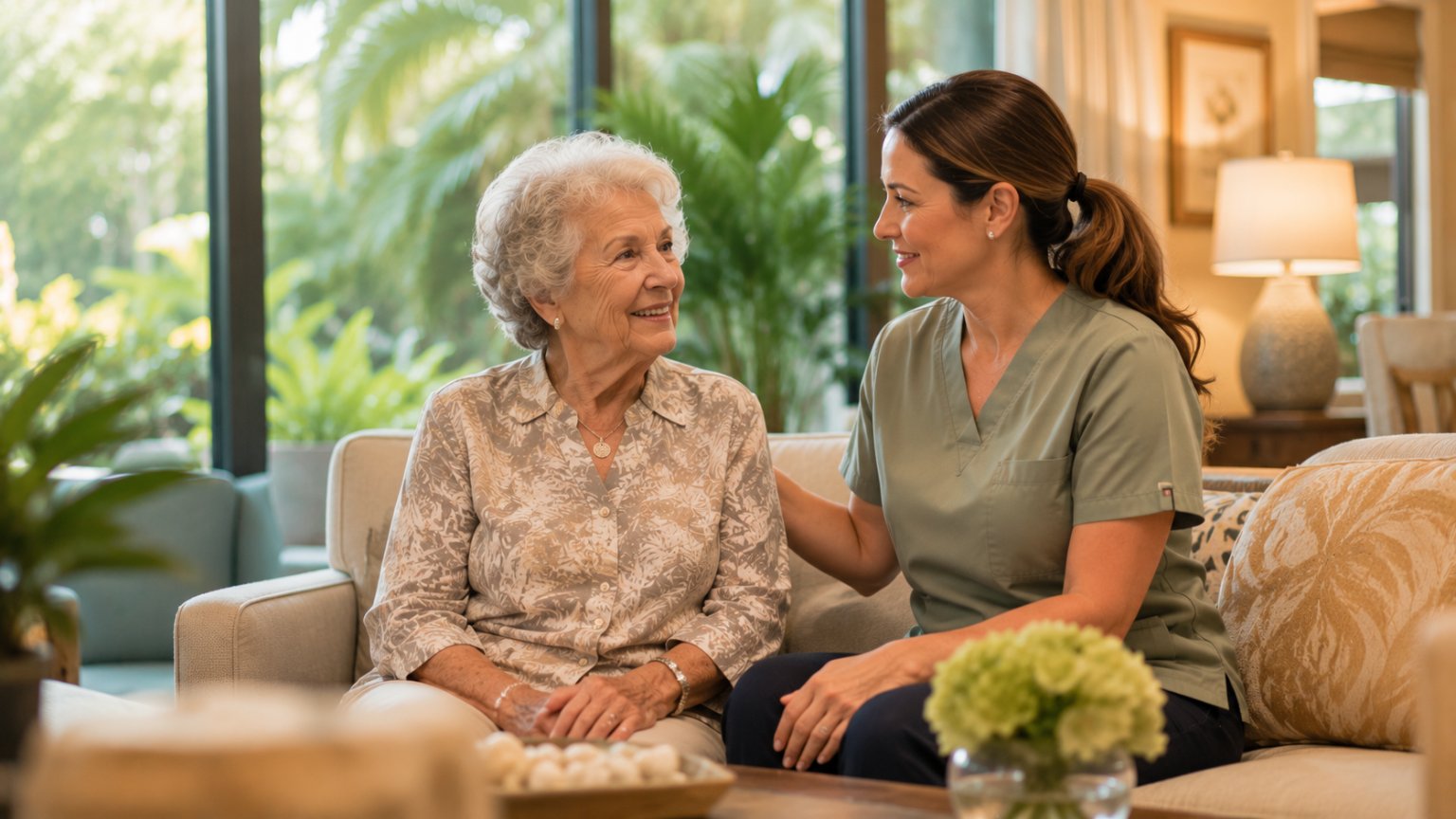
TL;DR: Choosing memory care in Boynton Beach comes down to staff training, security, dementia-specific programming, and how a community adapts as needs change.
Choosing a memory care community means finding a secured, dementia-focused setting where staff are specially trained to support people living with Alzheimer’s or another form of dementia. In Boynton Beach, families have real options, which is a gift and also a challenge when every website promises compassionate care.
Memory care is different from standard assisted living. It offers a more structured environment, higher staffing, secured spaces that prevent unsafe wandering, and programming built specifically for memory loss.
The goal of this guide is simple. It gives you the criteria that actually separate strong communities from average ones, so a stressful decision becomes a clearer one.
Start with what memory care really provides
Before comparing communities, it helps to know what good memory care includes. The Alzheimer’s Association describes these as special care units designed to meet the specific needs of people with dementia, often in a secured area within a larger community.
That specialization shows up in the details. Expect trained staff around the clock, a calm and easy to navigate layout, secured entrances and outdoor areas, and activities scaled to each resident’s abilities.
You should also expect a philosophy of dignity. The best communities support independence wherever possible instead of doing everything for residents, which protects confidence and self worth. This is the standard you will find in our memory care program, and it is a fair benchmark to hold every community to.
The criteria that matter most
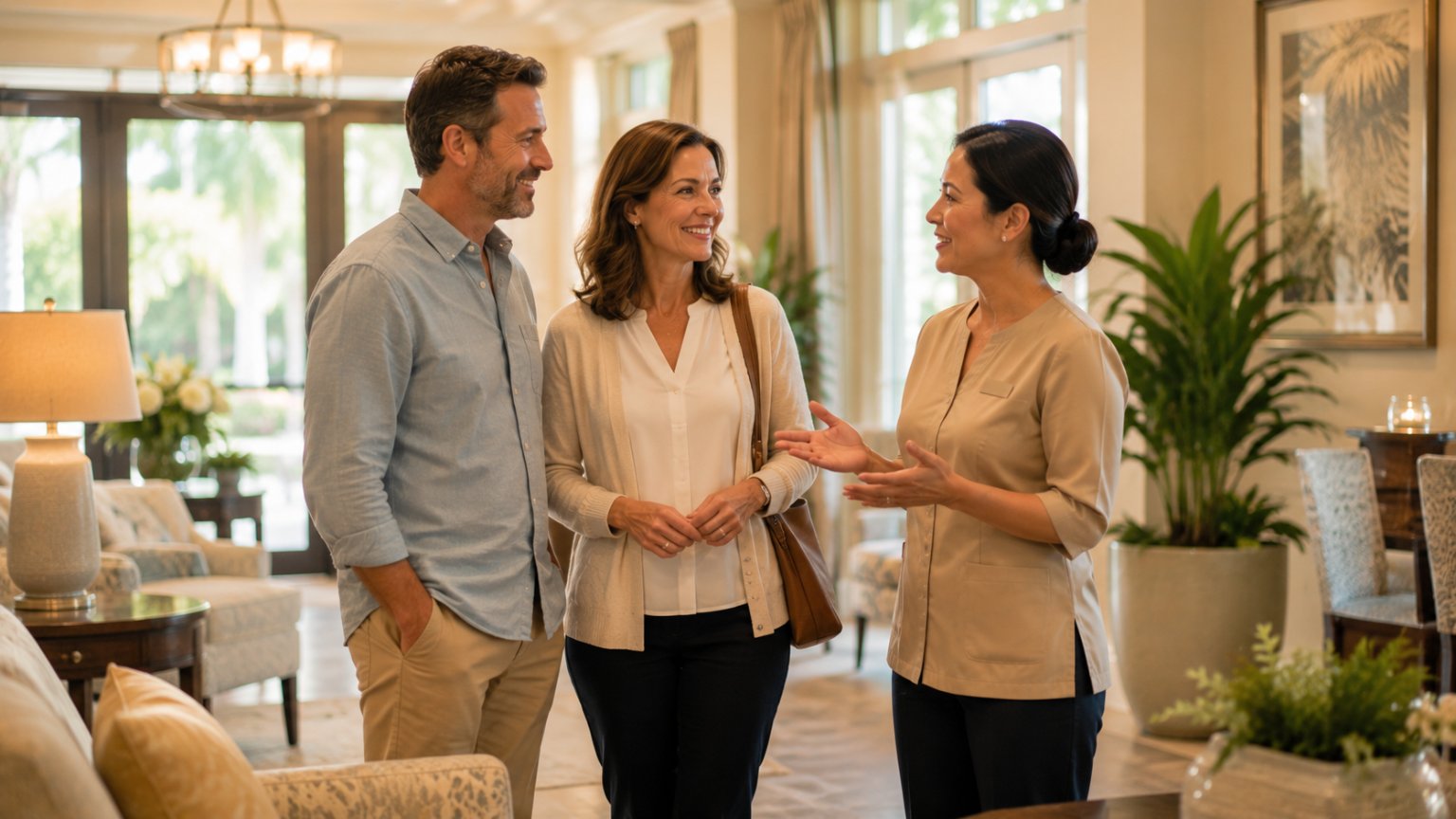
When you tour Boynton Beach communities, it is easy to be swayed by fresh paint and a friendly greeter. Those first impressions count, but a handful of deeper factors matter far more for your loved one’s daily life.
Staff training and ratios
Ask directly how staff are trained in dementia care, how long that training lasts, and what it covers. Caregivers who understand how to respond to confusion, anxiety, and agitation will shape your parent’s days far more than any amenity.
Staffing levels matter just as much. Ask about the resident-to-caregiver ratio during the day and overnight, and whether a nurse is on site or on call. Higher staffing generally means faster response and more personal attention.
Safety and security
Memory care exists in large part to keep people safe, so security deserves close attention. Ask what specific measures prevent residents from leaving unsupervised, and look for secured doors, monitored outdoor spaces, and thoughtful safety features throughout.
Walk the halls and notice whether the layout feels calm and easy to follow. A well designed memory care environment reduces confusion and lowers the risk of falls, which supports both safety and quality of life.
Activities and daily engagement
Purposeful days are one of the clearest markers of quality. Ask to see the activity calendar and watch whether the listed activity is actually happening during your visit.
Strong programs offer a range of options that support mental, emotional, and physical well-being, and they adapt activities to each person’s interests and abilities. A resident who loved music, cooking, or gardening should find echoes of that life in their daily routine.
Questions to ask on every tour
A good tour is a two-way interview. The Alzheimer’s Association recommends bringing a focused list of questions when you evaluate any long-term care community, and the answers reveal how personal the care truly is.
Ask how families are included in care planning and how you will be told about changes in your parent’s condition. Ask how the team handles challenging behaviors, and how they keep care consistent across shifts.
Ask about dining as well. Find out whether meal times are flexible, how staff monitor nutrition, and what happens when a resident does not like a particular meal or needs help eating.
Finally, ask what happens as the disease progresses. A thoughtful community can explain how it adapts care over time, ideally allowing residents to age in place rather than face another move during a hard season.
Why location and community fit matter in Boynton Beach
Staying close to home carries real weight. A community near your family in Boynton Beach makes frequent visits easier, and regular family presence is one of the most protective things for a person living with dementia.
Proximity also helps you stay involved in care. Popping in at different times, including evenings and meals, tells you far more than a single scheduled tour ever will.
There is a practical South Florida angle too. A local community understands the rhythms of the area, from seasonal weather to the way families gather, and that familiarity can make holidays, outings, and everyday visits feel more natural for your loved one.
Beyond distance, pay attention to how a place feels. Trust your instincts about cleanliness, warmth, and the way staff interact with residents, because that gut read is often accurate. Spending time in our Boynton Beach community is the best way to sense whether it fits your family.
Watch for these warning signs
Just as important as the green flags are the red ones. A few observations should give you pause and prompt harder questions before you commit.
Be wary if staff cannot clearly explain their dementia training, if the community will not share how often care plans are reviewed, or if you notice unpleasant odors, residents who seem disengaged, or a security setup that feels loose. Vague answers about what happens when needs increase are also a concern.
None of these alone means a community is wrong for your parent, but a pattern of them is a signal to keep looking. You are choosing a home, and it should earn your confidence.
Involving your loved one and the wider family
A memory care decision rarely rests on one person, and it should not. Bringing siblings and other close relatives into the search early prevents second-guessing later and spreads the emotional weight of a hard choice.
Where possible, include your loved one in the process too. Even when dementia has progressed, many people can share preferences about setting, routine, and the feel of a place, and honoring those wishes protects their dignity.
Give yourselves permission to take the time you need. Visiting two or three communities more than once, comparing notes as a family, and sleeping on the decision almost always leads to a choice everyone can stand behind.
It also helps to write down what matters most before you tour. When you know your priorities, whether that is secured outdoor space, a specific activity, or a particular approach to dining, you can compare communities on what truly counts instead of first impressions.

Making the decision with confidence
The right memory care community in Boynton Beach will combine trained and steady staff, genuine security, and engaging daily life, along with a clear plan for how care grows with your loved one. Weigh those factors above the surface features, and the choice becomes far less overwhelming.
Take your time, visit more than once, and bring your questions. That patience is what turns an overwhelming search into a decision you can feel settled about. The families who feel best about their choice are almost always the ones who looked closely, asked hard questions, and trusted what they saw.
FAQ
What is the difference between memory care and assisted living?
Assisted living supports people who need help with daily activities but are largely independent, while memory care is a specialized, secured setting for people living with dementia. Memory care offers higher staffing, dementia-trained caregivers, and programming built specifically for memory loss.
How do I know when it is time for memory care in Boynton Beach?
Common signs include unsafe wandering, worsening confusion, missed medications, and caregiving needs that exceed what family can safely manage at home. If daily safety and supervision have become constant concerns, a specialized memory care community is often the more protective choice.
What questions should I ask when touring a memory care community?
Ask about staff dementia training, resident-to-caregiver ratios, security measures that prevent unsafe exits, the activity calendar, and how families are included in care planning. Also ask how the community adapts care as the disease progresses so your loved one can stay in a familiar place.
Is memory care in Boynton Beach worth staying close to home for?
For most families, yes. A nearby community makes frequent, spontaneous visits possible, and consistent family presence is one of the most beneficial things for a person living with dementia. Proximity also keeps you closely involved in your loved one’s care.
What are red flags to watch for in a memory care community?
Be cautious if staff cannot explain their dementia training, if the community avoids questions about care plan reviews, or if you notice unpleasant odors, disengaged residents, or weak security. Vague answers about rising care needs are another reason to keep looking. When you are ready to compare communities in person, you can book a community visit and see the difference for yourself.
